Hannah Testani on CEO.com Podcast: Why Every Disruption is a Hidden Opportunity
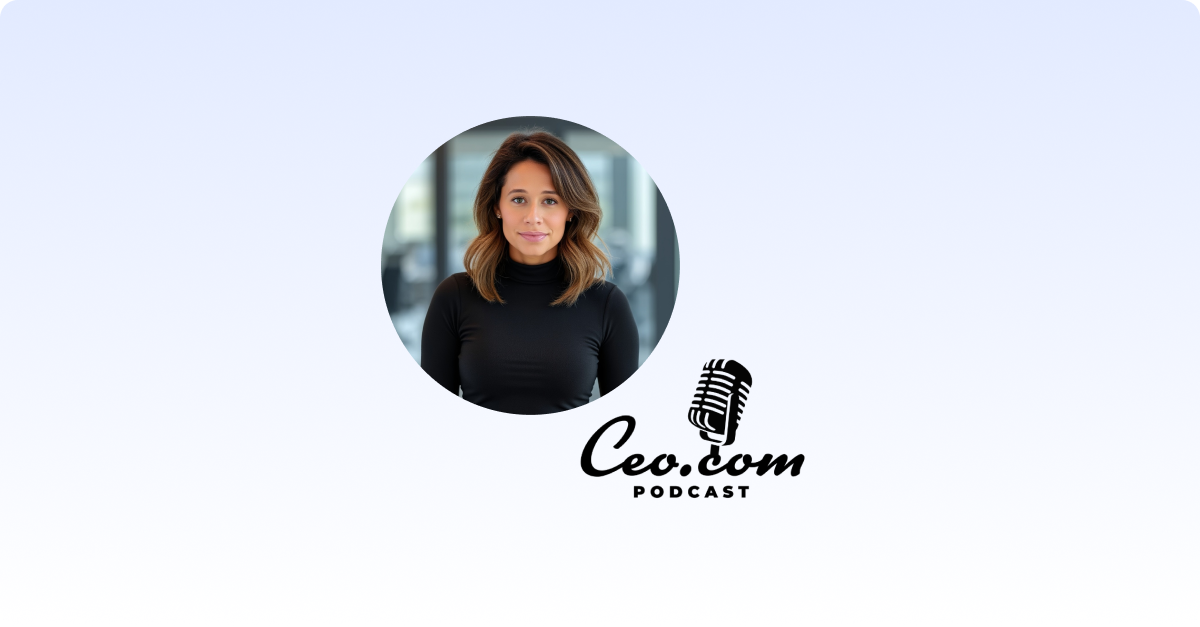

Getting invited onto CEO.com is no small feat. The platform is known for spotlighting leaders who are shaping how modern businesses operate. So when Hannah Testani joined the show, it was a clear signal. People are paying attention to how she thinks and how Intelligent Audit is approaching a rapidly changing world. And the conversation did not disappoint.
What Intelligent Audit is in a Very Simple Way
Hannah introduces Intelligent Audit with a clear, relatable analogy.
“Think about the hat you are wearing, the microphone you are speaking into, the books behind you. All of those needed to be shipped to you somehow.”
That journey is complex. Products move across countries, through multiple carriers, and into distribution networks. At scale, that complexity multiplies fast.
Intelligent Audit steps in at that point, analyzing global transportation data and uncovering patterns. Those patterns become actionable data, revealing inefficiencies, unnecessary costs, and missed opportunities. For example, oversized packaging or split shipments often go unnoticed. Intelligent Audit finds and helps shippers fix them.
As a result, companies reduce costs and improve customer experience. Fix those at scale, and the impact is significant.
AI That Actually Works
There is a lot of noise around AI right now. Hannah cuts through it quickly. She breaks it into two buckets. The first is productivity. That is the version everyone talks about. Do the same work faster. Think screwdriver versus drill.
The second is innovation. That is where things get interesting. It is not about doing the same job better. It is about doing things that were not possible before. Most companies are still stuck in the first bucket. At Intelligent Audit, the focus is on the second. That is where DeepDetectAI comes in.
Hannah explains it in a way that clicks immediately.
“You have never called your credit card company and said, alert me if someone in Nebraska spends a dollar at Target… the company learned your patterns, and when something atypical happens, it flags you.”
DeepDetectAI works the same way.
Supply chains are constantly shifting. Tariffs change. Suppliers move. New routes get added. Over time, those changes create patterns. When something breaks from that pattern, the system flags it. It is not about reacting after the fact. It is about catching issues as they happen. That is a very different (and way more impactful) way to leverage AI.
A Built-In Advantage During Disruption
Disruption creates complexity. Complexity creates opportunity.
When supply chains break or shift, companies move quickly. They solve problems fast, but not always correctly. Over time, those quick fixes lead to inefficiencies.
Intelligent Audit addresses that gap. It shows companies what happened and what should have happened. Then it provides a better path forward.
In this way, the platform becomes a strategic advantage. It turns reactive decisions into informed ones. It helps companies operate with confidence in uncertain conditions.
Hannah's View on Leadership
Hannah keeps her leadership philosophy simple. She believes fear holds companies back more than technology. AI will create change, but it will also create opportunity: “The real threat is not AI taking your job. It is fear keeping you from doing it.”
Her focus stays on clarity, accountability, and trust. She builds strong teams and aligns them around clear goals. Then she steps back and lets them execute.
Above all, she stays focused on progress. There will always be disruption. The key is to move forward anyway.
What This Moment Means
This CEO.com feature signals something bigger. Companies need more than visibility into their supply chains. They need intelligence. They need adaptability.
Intelligent Audit delivers both. And this conversation makes one thing clear. We are not reacting to change, we are helping companies lead through it.
Learn more about how Intelligent Audit can support your supply chain and logistics goals. Contact us today.
Tell us what Intelligent Audit is.
Think about the hat you are wearing, the microphone you are speaking into, the books behind you. All of those needed to be shipped to you somehow. Our job is to work with companies who ship products and help them do that in the most efficient way possible.
Your hat was probably manufactured somewhere in the world. It came to the US via airplane or ocean container, landed at a distribution center, and then was either shipped directly to you or went to a store. All of that is really complex, especially at scale when you think about buying millions of hats.
We work with anyone who ships anything across all types of verticals. We take all of their global transportation data, and within that data there are stories. Stories that allow us to go back to them and say, here is what you did and here is what you should have done. If you have ever purchased something and wondered why it came in a massive box, or why one order arrived in four separate shipments, those are the inefficiencies we find and eliminate. At scale, that saves a lot of money and makes for a much better customer experience.
How is AI changing all of this?
AI is the most transformative technology innovation that we will ever see as humankind. An easy way to describe it is this: we used to all work with screwdrivers. A screwdriver works. It gets the job done. Then someone gives you a drill, and suddenly you can be so much more impactful. You deliver faster, and now you have time left over.
From my perspective, AI breaks down into two components. The first is productivity, which is what most people talk about today. That is the drill example. It allows teams to be more effective at what they already do. The second is actual innovation, and I wish that got more attention. Innovation is what you can do with technology that you simply could not do before. Self-driving cars only exist because of innovations in machine learning. That is a different conversation than automating someone's job.
I actually think it would be easier for most professionals to conceptualize AI if they just used the word automation instead. We have been automating workflows and processes for decades. That is an easier pill to swallow, and it is a more honest framing of what is actually happening most of the time.
Where I see the real opportunity is on the innovation side. Our AI solution works similarly to credit card fraud detection. You have never called your credit card company and said, alert me if someone in Nebraska spends a dollar at Target. You did not need to. The company learned your patterns, and when something atypical happens, it flags you. That is exactly how our solution works. Supply chains are incredibly complex right now. Tariffs, no tariffs, new tariffs, a war, another war. As companies make changes in response to all of that, their shipping characteristics shift. Our AI watches those patterns and makes you aware when something does not add up.
The tricky part, and I would warn everyone here, is that AI is moving so fast. Where it is today versus three months ago is vastly different. You have to start implementing and be ready to make changes. If you are paralyzed waiting for the next new thing, you will never make progress.
A lot of people are anxious about AI taking their jobs. How have you managed that with your team?
Automation has always been part of our DNA as a technology company. We exist to find inefficiencies and automate them. That is what we do for our customers, and it is what we do internally.
Here is the reframe I would offer everyone: I have never met an executive at any company whose first constraint was not bandwidth. The answer is always, that sounds great, but I cannot get to it right now. In the next one to two years, I do not see a world where most companies do not have far more opportunities than they have people to pursue them.
Will AI replace a lot of jobs? Yes. Will it eliminate opportunities? No. As an executive team, your job is to paint that picture clearly. The pizza pie just got a lot bigger. Now you have to figure out how to feed everyone and make more money off the pizza.
How have tariffs affected your business?
Disruptions in supply chain are, selfishly, good for us. Our customers have set supply chains. That is the whole point of a supply chain: a chain where everyone depends on each other to move products. When there is any disruption, whether it is tariffs or a war, they now have to go solve a new problem.
If a company was sole-sourced in China, they are probably not going to do that anymore. They will spread manufacturing to India, Latin America, the US. That means more carriers, more locations, more complexity. Complexity is good for us. When things are easy, anyone can do it.
The other dynamic worth understanding is that when disruption hits, most companies solve problems the fastest way possible, not the smartest way. They are in firefighting mode, not engineering mode. You solve the problem in the moment and then look back later and realize there was a better way. That is where our technology shines. We can say here is what you did, here is what you should do going forward, and here is why it will be better for your costs, your customer experience, and your organization.
What does a typical day look like for you?
I have the luxury of working on the business, not in it. My job is to figure out where the ship is going, hire excellent people to steward their part of the ship, and then make sure everyone is doing what they need to do to get there. I am also scanning the horizon for external obstacles that could get in our way.
The beauty of where I am now is that I am not needed anywhere and probably not wanted in most meetings. That frees me up to talk to clients, prospects, partners, and competitors, and to really understand what is happening in the industry.
What advice do you have for leaders on the idea of working on the business instead of in it?
Every time you work in the business as a CEO, you are not setting yourself up for success. Three years ago we adopted EOS, the Entrepreneurial Operating System, and it was by far the most impactful decision we made as an organization.
Think about it like a soccer coach. You hire talented people, you practice with them, you coach them. But once the game starts, you are not on the field. The longer you stay on the field, the less your team develops. If you feel like you have to be in the day-to-day, ask yourself why. Either you do not have the right people, you do not trust them, or you have never clearly agreed on what they should be working on.
EOS is not complicated. There are no buzzwords. It is basic principles: align expectations, communicate clearly, hold people accountable. My most important weekly meeting is a 90-minute session with my executive team. We start with one question. How are you trending toward your quarterly goals? Are you on track? Do you need my help? Everything flows from there.
What changed when you implemented EOS?
Before EOS, urgent things dictated what you worked on. That is just the nature of a reactive organization. Once you become more strategic, you start the year by asking what has to be true by December. Everyone agrees. And from that agreement, prioritization becomes a lot easier.
A good CEO does not set the goals alone. You want everyone to feel like they were part of the process, because otherwise it does not feel like theirs. But what EOS really allowed us to do is make sure no one is ever asking, which of these eight things do you actually want me to work on?
We also run quarterly whiteboarding sessions before our executive meetings. Every manager gathers feedback from their team on what they see as opportunities. Managers try to solve those issues at their level first. What they cannot solve moves up. After the quarterly meeting, we trickle the outcomes back down. Every employee does not just feel heard. They are heard, and the right people are empowered to act on what they raised.
What do you read?
For EOS specifically, I love Good to Great and The Five Dysfunctions of a Team. More broadly, I read books about founders and entrepreneurs. Elon Musk, Steve Jobs, Sam Walton. When you read enough of them, you see the same themes. They work incredibly hard. They do not accept no at face value. They ask why the answer is no, because saying no is easy and problem-solving is hard. They are relentless. That grit, that determination, that pursuit of a goal in the face of resistance, that is what separates most people. You can never dream big enough.
There is a lot of anxiety about the macroeconomic environment right now. How do you manage it?
You have to go through it to realize you are going to be fine. If you have ever been through real trauma, you come out the other side with a different perspective. You stop catastrophizing. You focus on facts and mission instead of emotion.
There are always disruptions. The first SARS outbreak, the financial crisis, COVID, now AI. There are always reasons to be scared. But there are also always tremendous opportunities. The question is whether you let fear paralyze you or whether you get educated and get moving.
I am lucky. I live in America and there is no imminent danger to me or my family. That is a luxury that lets me think this way. And when I think about the realistic probability of the world actually ending, it is very small. Doomsday thinking is easy and also exhausting. It is harder to be optimistic and realistic and assuring, but it is so much more fun. And it is also just more accurate. We are all still going to be here in a few years. Let us be realistic about that.
We end every interview with the same question. At CEO.com, we believe the chances you give are just as important as the chances you take. Who gave you a chance?
Honestly, most people around me impeded my ability to grow. When I was being considered for my role, people told me I was a young woman, I was a mom, I was probably not right for the position. If I had to name one person who made the difference, it is my husband. He was the one who said, go prove them wrong.
Most spouses either become your biggest advocate or the reason you do not succeed. I am very lucky mine pushed me forward. Beyond him, our board was impactful, and there were a lot of people willing to teach me. I love to learn, so I tried to make the most of every one of those moments.
Subscribe for more content!
Stay ahead of the curve in supply chain and logistics technology. Get practical insights on AI-driven automation, real-time visibility, and the tools reshaping how goods move—delivered straight to your inbox.

.png)