In-House AI vs. Freight Audit Partner: What Shippers Need to Consider


The question is not whether a shipper can build a model. It is whether it wants to recreate the data foundation, intelligence platform and expertise behind it.
AI has made the idea of building freight audit internally feel more realistic than ever.
Companies can now use AI to read documents, compare records, identify patterns and automate decisions with far less effort than even a few years ago. From the outside, that can make freight audit look like a logical candidate for an internal build: connect the invoices, load the contracts, train the model and let it find the errors.
But that starting point defines the capability far too narrowly.
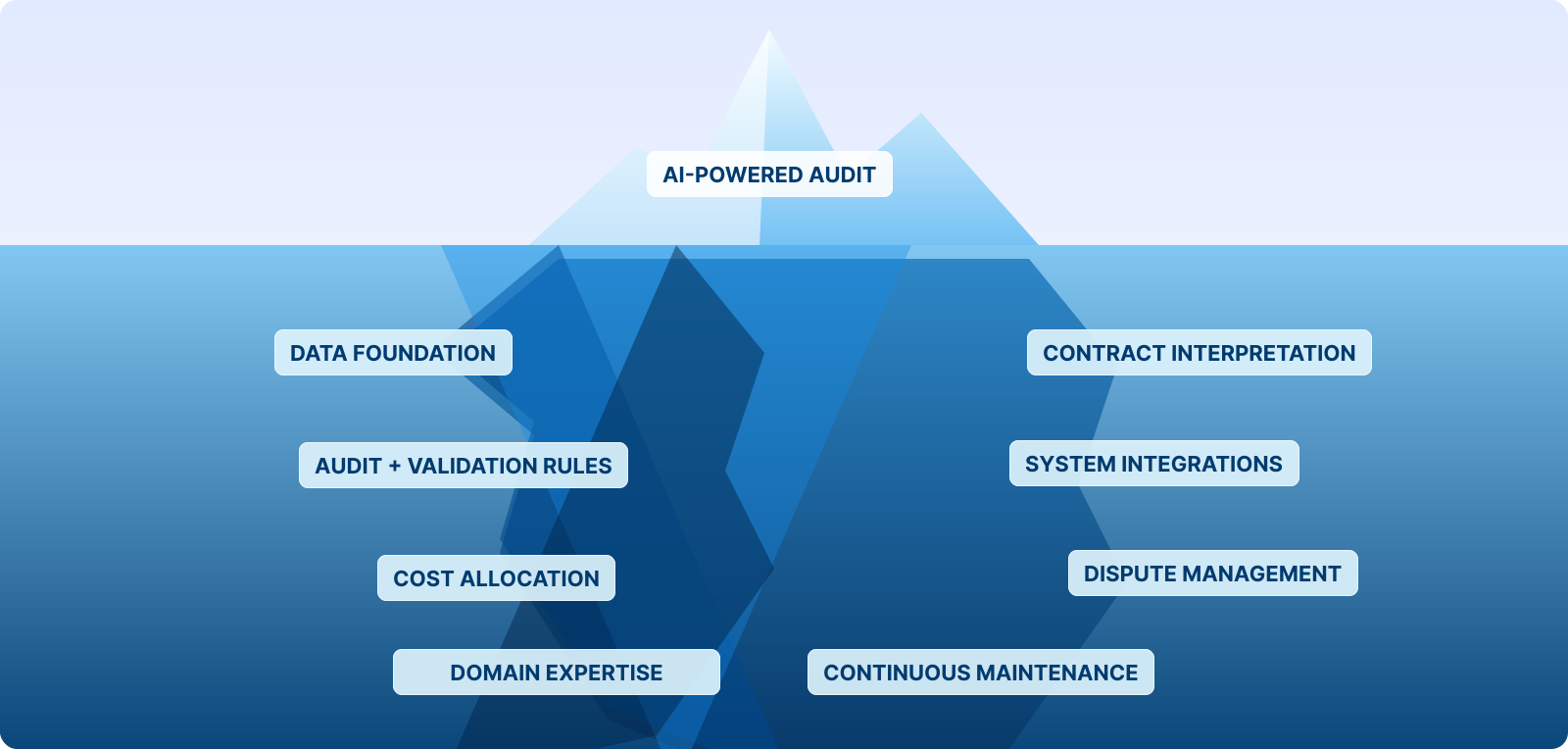
The real question is not whether a shipper can build an AI model that performs part of the audit. It is whether the organization wants to recreate the data foundation, financial controls, intelligence capabilities and specialized expertise that already surround a modern freight audit operation.
The True Scope of an Internal Build
If freight audit is defined as software that compares an expected rate to a carrier invoice, an internal AI model can sound like a reasonable substitute.
But, modern freight audit and transportation intelligence extend well beyond that calculation.
Before an invoice can be validated, data from carriers, contracts, shipping systems and financial platforms must be connected and normalized.
Once that foundation exists, it supports far more than invoice review. It can power cost allocation, accruals, reporting, anomaly detection, contract compliance, operational analysis, optimization and network decisions.
The audit is one important application of the data, but it is not the limit of its value.
That distinction matters because an internal build is not replacing one audit function. It is attempting to recreate a broader transportation data and intelligence capability, which quickly becomes far more complex.
The Imperative Data Foundation
The expected rate may live in a shipping or transportation system. Contract terms may sit in carrier agreements, spreadsheets or pricing tools. Shipment details may come from a TMS, WMS, ERP or manifest system. Final weights, dimensions, service events and accessorials may arrive through carrier feeds and invoices. Payment and credit records live somewhere else again.
AI does not make those systems connected simply by being introduced.
“Without high-quality, unified operational data and robust core systems, AI initiatives will likely underperform or fail outright.”
Gartner®, Achieving Logistics AI Success: Build the Digital Foundation First
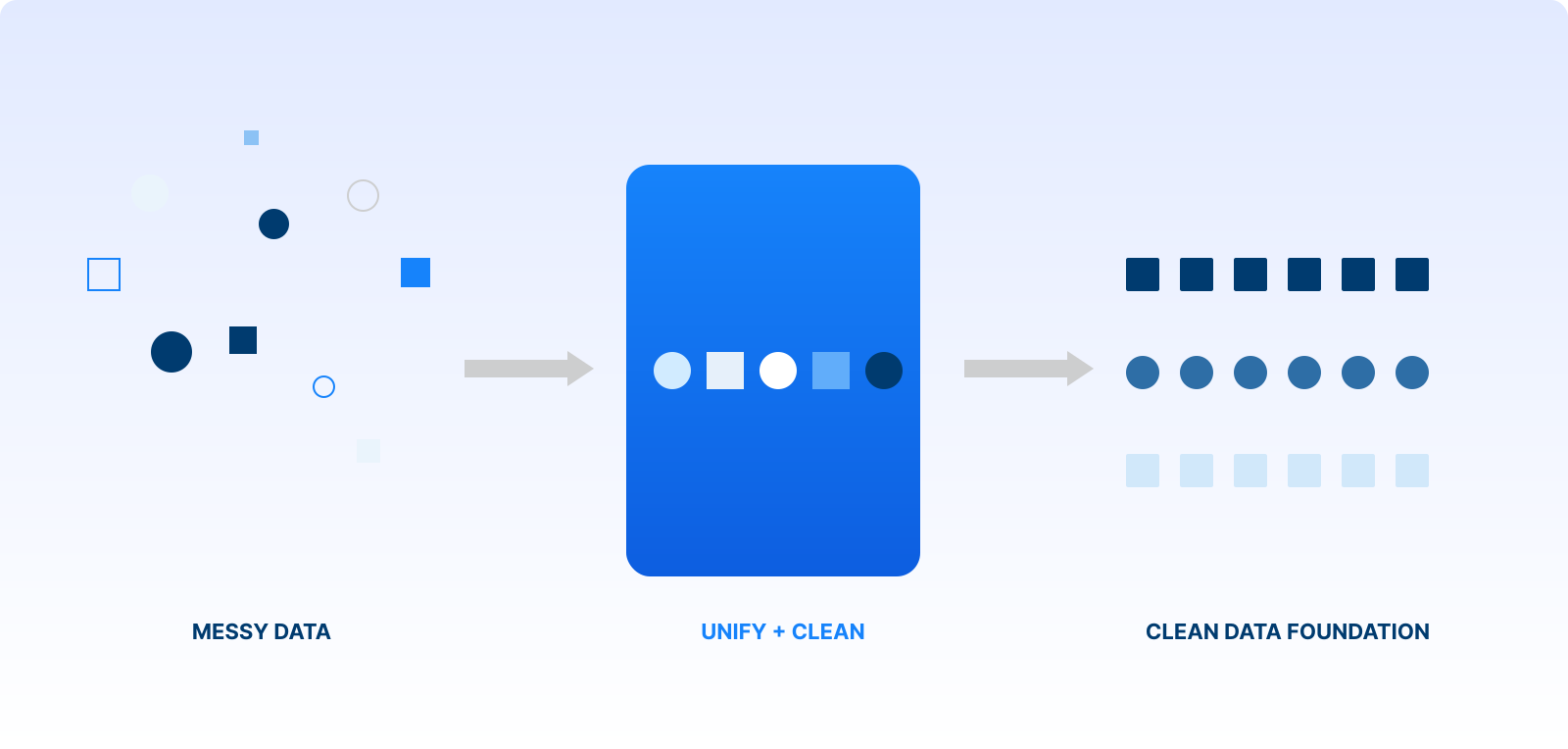
Gartner’s warning exposes a step that is often missing from the build-versus-buy conversation. Before a model can produce a reliable audit result, someone must bring the relevant information together, standardize it, match it at the shipment level, and determine what should be trusted when sources conflict.
That work is not merely implementation before the real value begins. It is part of the value.
A platform that continuously unifies messy transportation data creates a durable foundation the organization can use across finance, procurement, transportation and operations. Rebuilding the audit calculation without recreating that foundation produces a much smaller capability than many shippers expect.
The AI-Readiness Gap
Transportation teams rarely suffer from a lack of data. The challenge is whether the data is reliable, standardized, timely and connected enough to support decisions.
Gartner describes logistics data maturity as a journey. Organizations first move beyond manual and fragmented handling by automating and standardizing data inside individual functions. More advanced stages connect information across departments, trading partners, and external ecosystems, eventually incorporating real-time structured and unstructured data.
Freight audit crosses that entire landscape. It touches transportation, procurement, finance, accounts payable, IT and external carrier relationships. A company may have enough data to experiment with AI without having the maturity required to rely on it as an enterprise financial control.
Accenture’s 2026 Pulse of Change illustrates how large that gap remains. Only 32% of leaders reported achieving sustained, enterprise-wide AI impact, even as organizations continued increasing investment. Accenture also identified concerns about output quality and the strength of organizational data foundations as risks to sustained adoption.
The lesson is not that AI lacks value. At IA, we're rapidly adopting AI to build meaningful value for shippers.
The argument has never been about AI vs. us, or any other provider. The argument is that AI alone cannot create lasting value when the foundation beneath it is incomplete.
Freight Audit Beyond Invoice Checking
A legacy freight audit model begins when the invoice arrives. The invoice is checked, a discrepancy is identified, a dispute is filed, and a credit is recovered. A whole industry was built on that, but that's not how modern providers operate today.
That remains part of the work, but it is not a complete description of the capability.
A modern freight audit platform connects what the shipper expected to happen, what physically happened, and what the carrier ultimately billed. It brings the contract, shipment, carrier, and financial records into one consistent view.
That connected view makes it possible to do more than determine whether an individual charge is correct. It can reveal where costs are rising, where operational behavior is creating unnecessary spend, where contract terms are being applied inconsistently, and where patterns are emerging across carriers, locations, or business units.
That is the difference between an audit tool and a transportation intelligence platform.
AI Inside a Broader Platform
AI is exceptionally well suited to transportation data. It can process enormous volumes, identify relationships across datasets, and surface patterns that manual teams could never find consistently at scale.
AI can reveal fraud, service misuse, unauthorized shipping, operational shifts and emerging cost patterns that might otherwise remain hidden. Conversational AI can make complex transportation data accessible to people who do not know which report to run or how to build an analysis from scratch.
Those capabilities are not less valuable because they depend on data and expertise. They are more valuable when they operate within a trusted foundation.
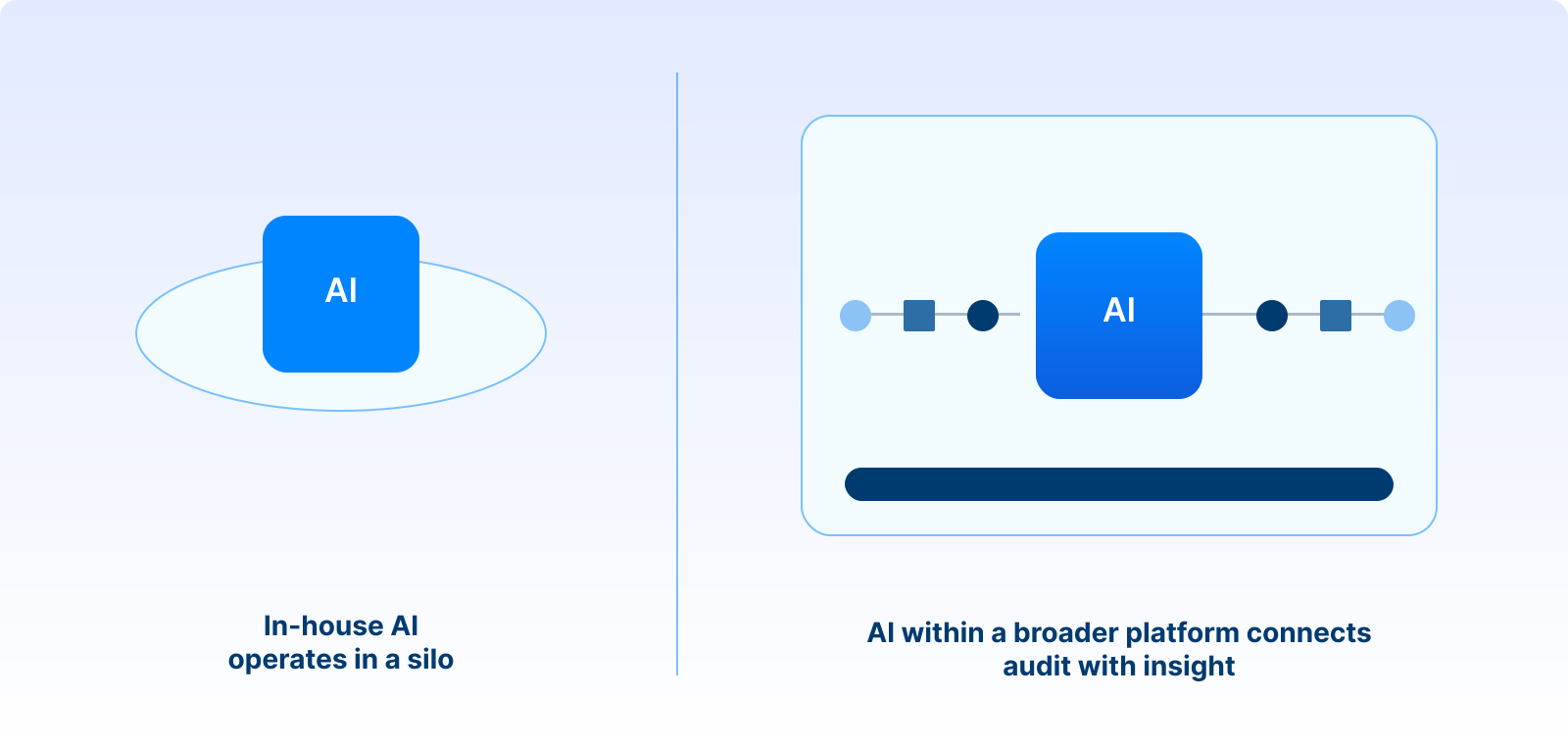
The model can analyze what it receives. The platform determines whether it receives the right information, in the right form, with the context required to make the result meaningful.
Where AI-Only Auditing Falls Short
An AI-first audit experience can be compelling. It can accelerate review, prioritize potential invoice errors and give shippers faster access to their transportation data. The weakness appears when AI is treated as the entire operating model rather than one powerful capability inside it.
- There is no plug-and-play freight audit standard an internal team can simply connect to. A shipper needs to support every carrier, contract, mode, system, cost-allocation rule, and approval workflow across its own network. Those inputs differ, and they continually change. An in-house solution must translate that variability into reliable audit logic and maintain it over time.
- Governance matters as much as speed. The original shipment, invoice, contract and validation data must remain protected when a result is challenged.
- High-impact or ambiguous cases need traceability, escalation and informed judgment. False positives create unnecessary work, while false negatives leave financial exposure undetected.
This is not an argument against AI-powered auditing. It is the reason AI should operate within a platform and process designed to turn its findings into accurate, contract-grounded outcomes.
Expertise as Infrastructure
Technology is only part of what a shipper receives from a modern freight audit and transportation intelligence partner.
The people surrounding the platform understand carrier contracts, pricing structures, audit requirements, cost allocation, system integrations and the operational decisions behind the data. They help determine what information is needed, how it should be validated, which patterns matter and what the organization should do next.
That is not simply customer support added after the software. The expertise shapes the implementation, the controls, the analysis and the outcomes.
When a potential invoice error is identified, someone must:
- determine whether it is valid
- assemble the supporting information
- manage the dispute
- evaluate the response
- confirm the resulting credit
When a recurring issue appears, someone must understand whether the cause sits with the carrier, the contract, the data, the shipping system, or the operation itself.
An internal build therefore requires more than software development.
It requires the organization to build, hire and retain a specialized transportation data and audit team around the technology.
For a deeper examination of how AI and freight audit expertise work together, read In Freight Audit, AI Is a Tool. Expertise Is the Advantage.
Connected Data, Independent Control
Enterprise shippers often operate across multiple carriers, systems, modes, facilities, regions and business units. Some of that complexity can be consolidated. Some of it is an enduring part of the business.
A transportation data and audit layer can connect that environment without requiring every shipment to originate in the same execution platform. It can combine expected, actual, and billed information while maintaining a separate validation point across the ecosystem.
That independence can be valuable. If the same configuration or contract interpretation is used to calculate the expected charge and validate the invoice, both processes may share the same blind spot. A separate control layer can test the execution record as well as the carrier invoice rather than assuming either is automatically correct.
The goal is connection with accountability.
The Complexity Still Has an Owner
Bringing freight audit in-house does not remove its complexity. It transfers responsibility for that complexity to the shipper.
Carrier billing is not a static rules exercise. Rates change. Fuel tables are updated. Surcharges take effect or expire. ZIP-code classifications shift. Contracts are amended. New carriers and services are introduced. Internal business rules evolve as networks, fulfillment locations, and customer requirements change.
An internal team may be able to build automation, reporting, and AI-driven audit workflows. It must also:
- manage carrier changes
- maintain account-specific rules
- account for new data formats
- investigate exceptions
- protect data integrity
- work with carriers when something is wrong
Every new carrier, system and business rule expands the operating footprint. Someone must own the mappings, testing, monitoring, escalation, documentation and continuity behind the technology.
The technology may be possible with the right resources, but the entire operating model is the harder part.
The Real In-House-or-Partner Comparison
The internal-build conversation often compares the cost and capability of an AI model with the audit portion of an external platform.
That is not an equal comparison.
The more accurate comparison includes the transportation data infrastructure that connects and normalizes fragmented information. It includes the audit and financial controls grounded in contracts, shipment details, and carrier requirements. It includes the analytics and AI that turn the complete dataset into insight. It includes the operational workflows that carry an issue through to a financial result. And it includes the specialists who understand how to use the platform, interpret the findings, and improve the business.
That combined capability is what the shipper is choosing to own internally or source through a partner.
The Decision is About Ownership
AI has changed what shippers can automate.
AI has not changed the underlying responsibilities required to make freight audit accurate, reliable and operationally useful.
An in-house approach makes the shipper accountable for the data foundation, audit logic, governance, integrations, carrier changes, exception workflows, and specialized talent surrounding the technology. A partnership makes the provider accountable for maintaining that operating capability and producing outcomes that hold up in the real world.
The right comparison is therefore not internal AI versus audit software. It is an internally owned freight audit operating model versus the full platform, processes and expertise available through a partner.
The question is not whether AI belongs in freight audit. It does. The question is who should own the complexity required to make it work reliably.
Subscribe for more content!
Stay ahead of the curve in supply chain and logistics technology. Get practical insights on AI-driven automation, real-time visibility, and the tools reshaping how goods move—delivered straight to your inbox.