30 Years of Turning Transportation Complexity into Intelligence Top Shippers Trust


Intelligent Audit did not begin with a fancy pitch deck in a boardroom, a funding round or a theory about how logistics should work. It began with a person paying close attention to the work in front of him.
For 30 years, Intelligent Audit has built technology from firsthand knowledge of the processes transportation teams rely on every day. The company’s history is not separate from its innovation. It is the reason that innovation solves real problems, works at enterprise scale, and continues to earn customers’ trust year after year.
The result is a rare combination: the technical ability to keep moving transportation intelligence forward and the operational judgment to understand what the data actually means and why it matters.
Founded on Removing Friction
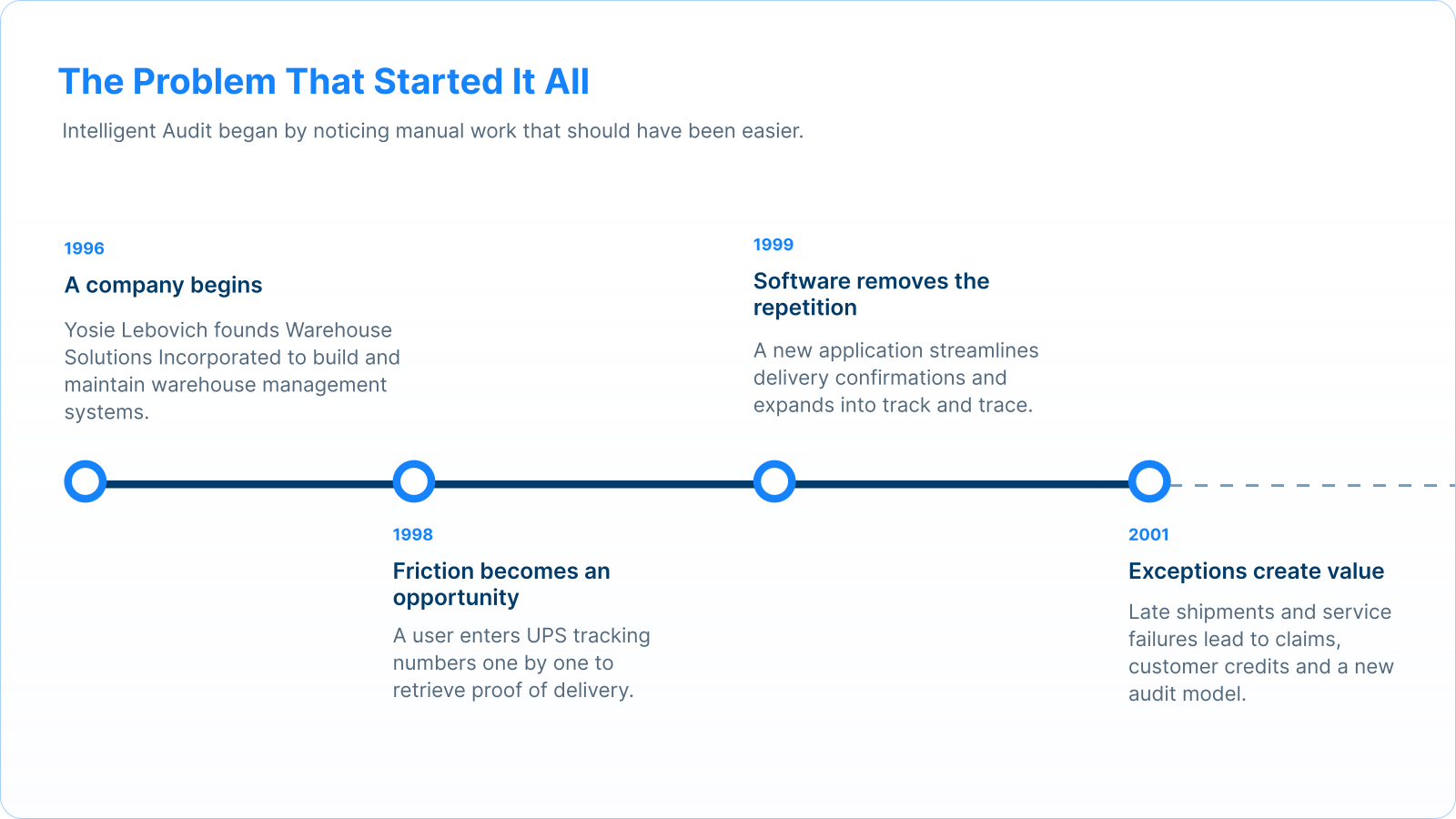
Yosie Lebovich arrived in the United States in 1980 at 17 years old. He studied computer science, began his career as a hardware and software engineer and spent more than a decade building and maintaining warehouse management systems.
In 1996, he founded Warehouse Solutions Incorporated with a straightforward business plan: write and maintain warehouse management software. Two years later, while consulting in the warehouse technology space, he noticed a user visiting UPS.com and entering tracking numbers one by one to retrieve proof of delivery. The process was repetitive and painfully slow, but essential. Those confirmations were needed before the business could be paid.
Yosie saw an opportunity to make it easier.
He built an application that streamlined the retrieval of tracking information and delivery confirmations. That solution prompted the next question: What else could the company do while tracking a shipment?
The answer led to track and trace, the identification of late shipments, service claims and credits returned to customers. One practical improvement became the first step toward the platform Intelligent Audit is today.
Expertise Earned One Process at a Time
There is knowledge that can be learned from a process map. There is another kind of knowledge that comes only from working through the process itself.
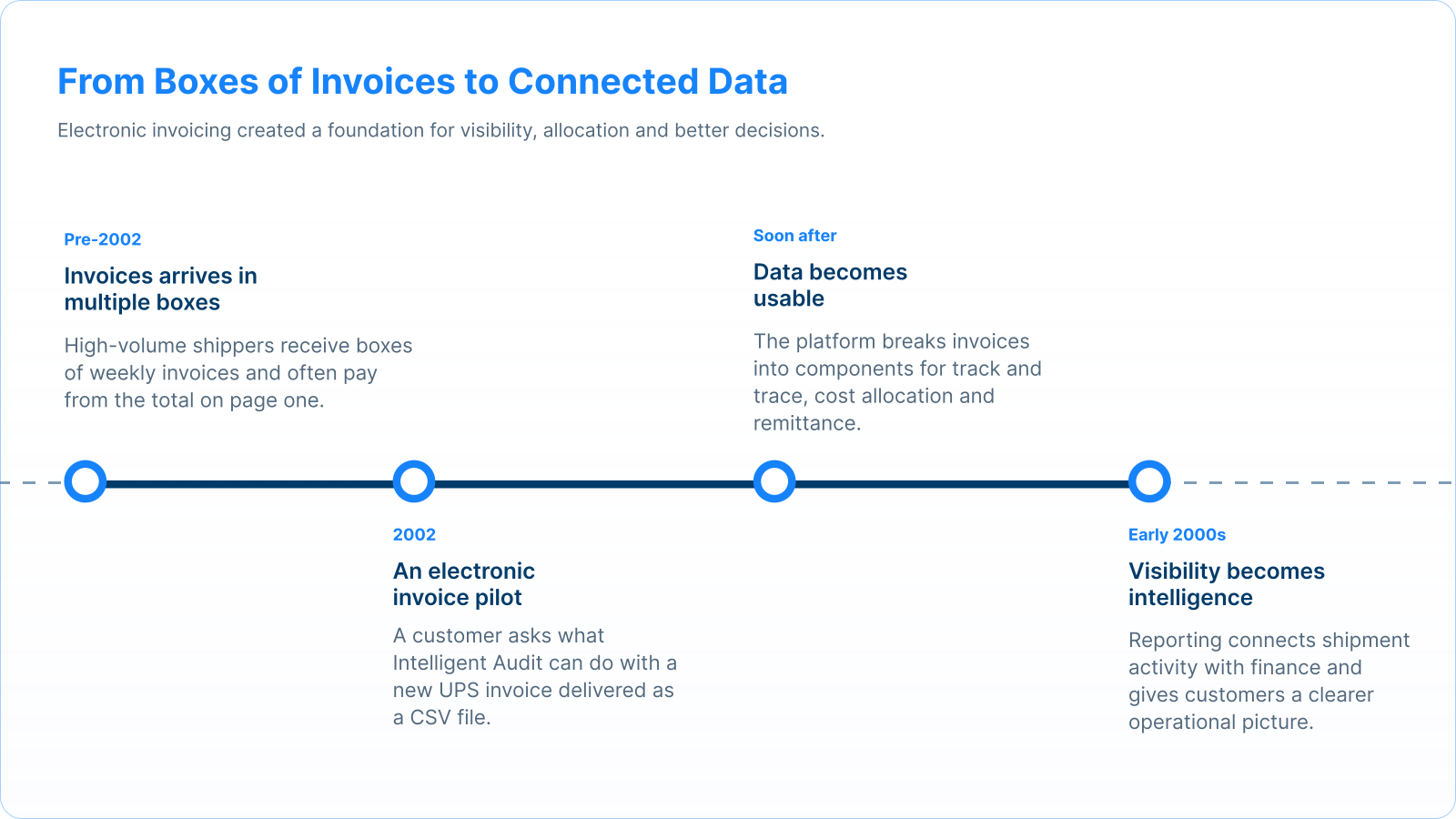
In the early years of Intelligent Audit, transportation data often arrived on paper. A shipper moving thousands of packages could receive multiple boxes of invoices each week. Someone had to sort through those pages to understand what had shipped, what it cost and whether anything had gone wrong.
So, as you can imagine, for many organizations, the practical response was to look at the total on the first page, send a check, and move on.
The warehouse received very little, if any, information. Finance received nothing. The business paid its carriers without a clear, usable picture of the shipments behind the total.
Intelligent Audit learned the details because its people had to touch them. They saw how information moved between the warehouse and finance, where context disappeared, and how difficult it was to connect a carrier charge to the shipment activity that created it.
In 2002, a customer invited Intelligent Audit to participate in a UPS electronic invoice pilot. Instead of another box of paper, the customer received a CSV file and asked Yosie what he could do with it.
The company built a product that pulled in the electronic invoice, separated it into usable components and connected the information to track and trace, cost allocation, remittance instructions, and reporting. The value was no longer limited to processing an invoice. The data could help customers understand their operation.
Why Parcel Had to Come First
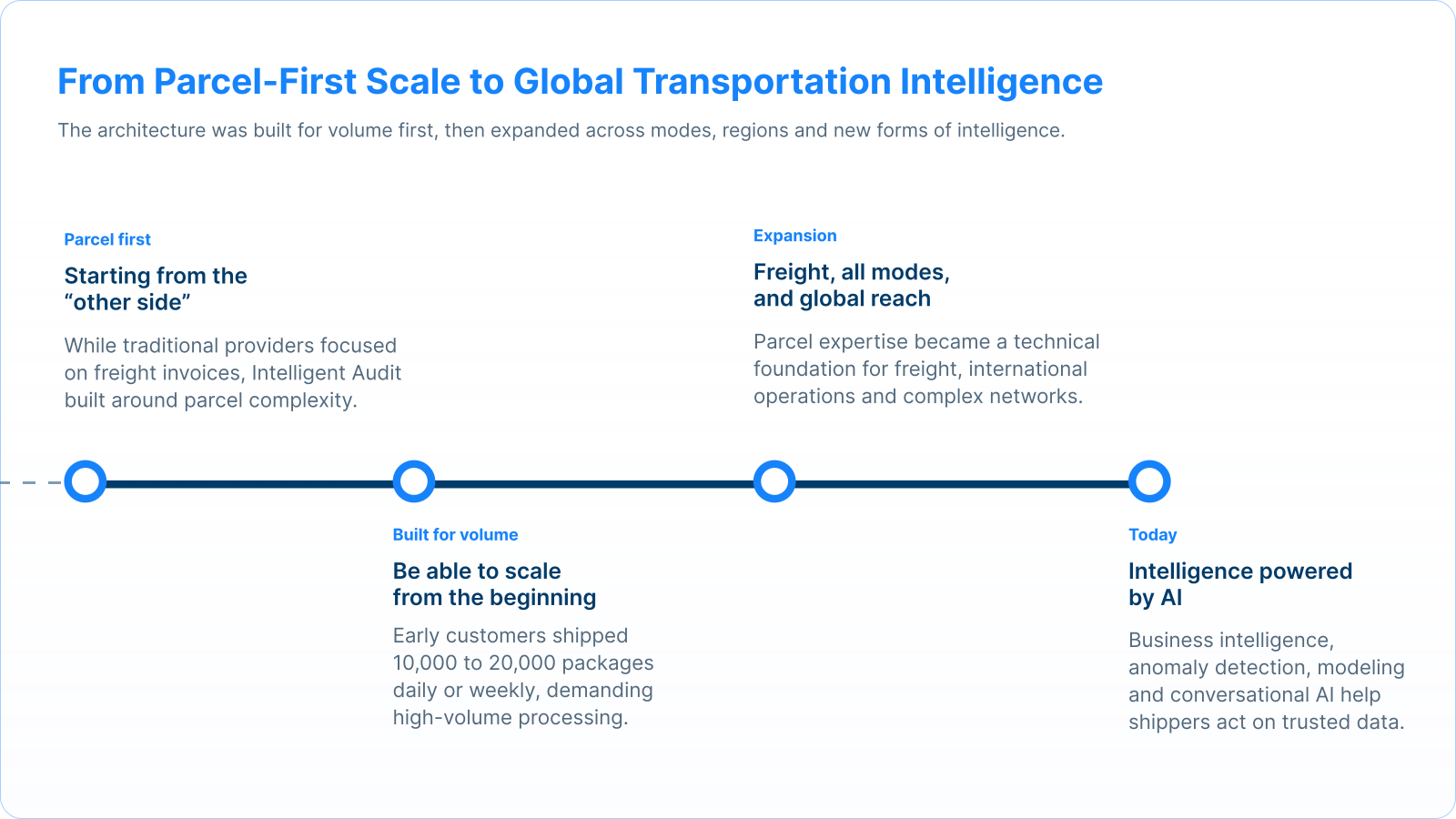
Most freight audit providers at the time were designed around freight invoices. They received paper, entered the information into a system, and repeated the process. When parcel entered the picture, the volume and level of detail created a different challenge. One that providers at the time weren’t equipped to embark upon. In Yosie’s words, “they just weren’t ready for that.”
Intelligent Audit built its business around small parcel audit. Some of its earliest customers shipped between 10,000 and 20,000 packages daily or weekly, so high-volume transaction processing could not be added later. It had to be part of the architecture from the beginning.
That parcel-first foundation taught the company how to manage enormous transaction volumes without losing the shipment-level detail that determines whether an invoice is correct, a service commitment was met, or an exception deserves investigation.
It also created the technical and operational foundation for expansion into freight, additional modes, international operations and increasingly complex global transportation networks.
This is why parcel audit is more than one item in a list of services. It is where Intelligent Audit learned to combine scale with precision. That discipline now strengthens every mode the company supports.
Building the Business by the Bootstraps
Intelligent Audit was fully bootstrapped. There was no “next funding round” and no reserve of capital waiting to absorb the next mistake. Growth depended on serving customers well, earning revenue, and making disciplined decisions about where to invest.
During the company’s early years, Yosie wore nearly every hat. He spent his days working with customers and his evenings developing software, delegating work to engineers and reviewing what they built. Sixteen-hour days were common.
Bootstrapping also created a different sense of responsibility. Building a company meant being responsible not only for his own family, but for the employees and families depending on the business. Payroll had to be protected even when there might not be enough left to pay himself.
That pressure shaped the company’s discipline. Intelligent Audit had to plan ahead, build enough resilience to survive the unexpected, and focus its resources on problems customers genuinely needed solved.
It is easy to describe a company as customer-focused. Intelligent Audit’s history required it, setting the foundation for becoming the “people-obsessed problem solvers” the team is today.
Three Decades of Innovation
Thirty years of experience can become a reason to protect the past. At Intelligent Audit, it has become a better way to build the future.
Yosie describes a business plan as a roadmap that cannot be rigid. Markets change. Technology changes. Customers’ needs change. A company has to keep looking around, learning, and adjusting what it builds. Being stuck in the old ways of doing things serves no one in an industry that is continuously evolving.
That mindset carried Intelligent Audit from its early roots to the global leader it is today.
The newest technology is not detached from the work that came before it. AI is being applied to transportation data that has already been normalized, audited and understood through decades of operational experience.
That context makes innovation more useful. More trusted.
Technology Can Be Replicated; People Cannot
Software features can be copied. Interfaces can be imitated. New tools can be introduced quickly.
The judgment behind them is much harder to reproduce.
Trust comes from people who understand how transportation information is created, how an invoice should behave, where errors tend to hide, and when a data point deserves a second look.
That knowledge accumulates through years of investigation, implementation, customer conversations, and problem solving. It also gives Intelligent Audit’s product teams a stronger starting point. They are not designing for an abstract user. They are building around processes the company has worked through directly. Like Yosie said himself,
“We have products. We build software. But at the end of the day, it’s the people that work in the company that make the company great.”
The people make the technology more credible, and the technology gives their expertise greater scale. Neither advantage is as powerful alone.
The Obvious Choice is Earned
For an enterprise shipper choosing a parcel or freight audit provider, trust cannot rest on a feature comparison alone.
The provider will touch transportation data, carrier invoices, financial processes and decisions that affect cost, service and customer experience. The work requires technology that can process enormous complexity and people who understand what that complexity represents.
Intelligent Audit has earned that position by doing the work at every stage of its evolution.
It knows parcel because it was built around its complexity. It knows freight because it learned the differences mode by mode. It knows transportation data because it worked through the paper, the files, the invoices, the exceptions, and the financial workflows that had to become connected.
Most importantly, it continues to apply that knowledge to what customers need next.
Thirty Years in and Still Looking Ahead
Legacy and innovation are sometimes treated as opposing ideas. Intelligent Audit’s history shows how strongly they can reinforce each other.
Legacy provides context. It preserves the lessons earned through manual work, high-volume processing, changing carrier networks, customer demands, difficult partnerships, and unexpected disruptions.
Innovation puts those lessons to work in new ways. It removes the next point of friction, makes expertise more accessible and helps customers move from data to action faster.
Thirty years after Yosie noticed someone entering tracking numbers one at a time, Intelligent Audit is still driven by the same instinct: pay attention to the work, understand the problem and build a better way forward.
The technology will keep evolving. The people, expertise, and problem-solving philosophy behind it are what make the company uniquely prepared for what comes next.
Hear From Our Founder: Watch the Interview with Hannah & Yosie
To mark Intelligent Audit’s 30th anniversary, CEO Hannah Testani sat down with her father and company founder, Yosie Lebovich, to revisit how the business began, the challenges that shaped it, and the lessons that continue to guide its future. Their conversation offers a candid look at the hard work, hands-on experience, highs and lows, and deeply held principles behind Intelligent Audit.
Subscribe for more content!
Stay ahead of the curve in supply chain and logistics technology. Get practical insights on AI-driven automation, real-time visibility, and the tools reshaping how goods move—delivered straight to your inbox.