FedEx's 2027 GRI is More Than a Rate Increase

FedEx has announced its 2027 General Rate Increase, effective January 4, 2027, with package list rates increasing an average of 5.9%. While the headline increase is consistent with a typical annual GRI, the broader announcement includes structural changes that could create a more uneven, shipper-specific impact than prior years.
Base freight rate increases vary materially by service, weight, and – in several cases – zone.
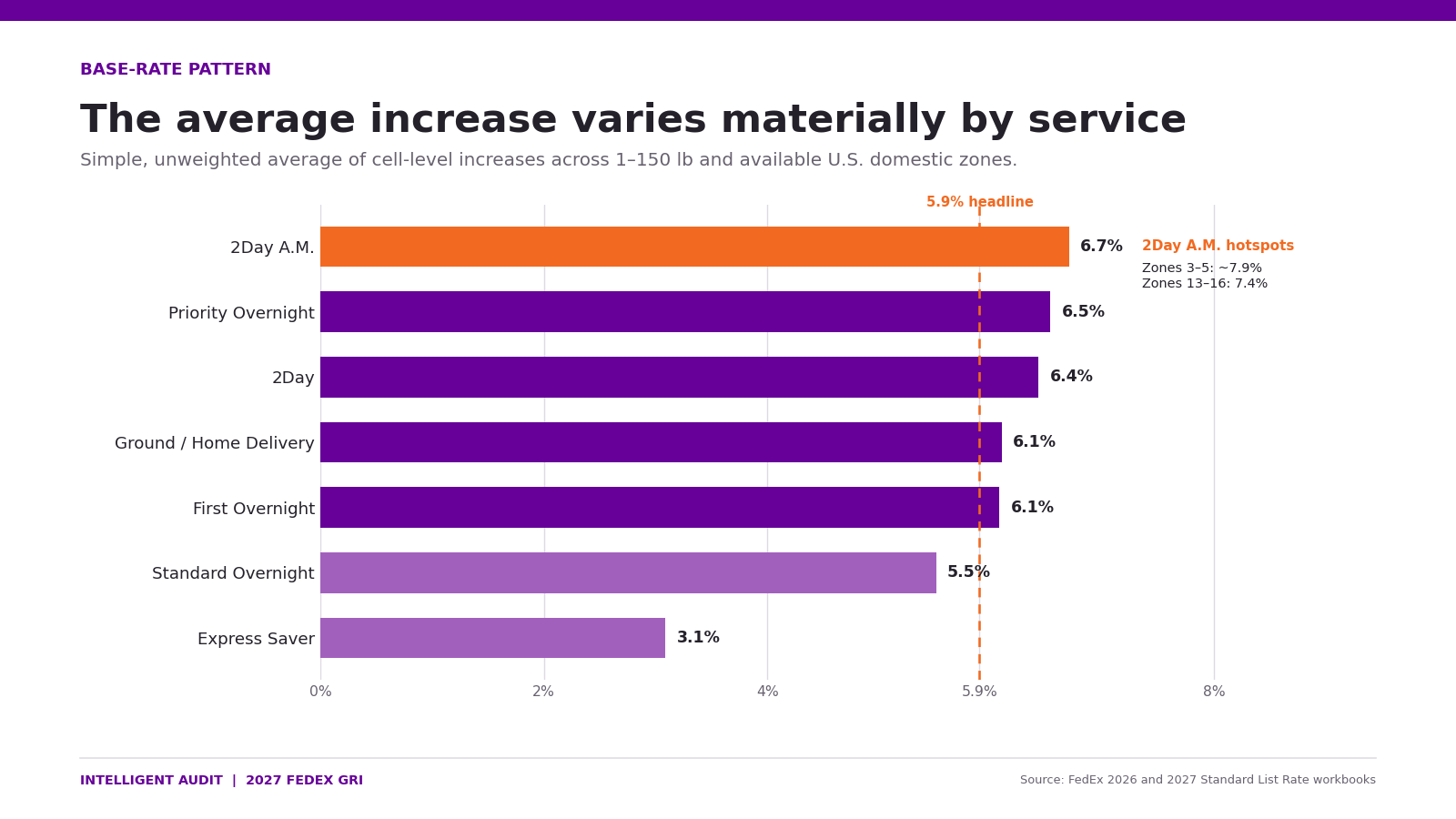
- FedEx 2 Day A.M. is among the higher increase services, with 7.4% to 7.9% increases concentrated in Zones 3 to 5 and Zones 13 to 16.
- Express Saver is materially lower at approximately 3.0% to 3.9% and is comparatively consistent by zone.
- Most other services cluster more closely around the announced increase, although:
- 2 Day and Ground/Home Delivery trend modestly above it.
- Standard Overnight trends modestly below it overall.
- First Overnight increases more sharply as package weight rises.
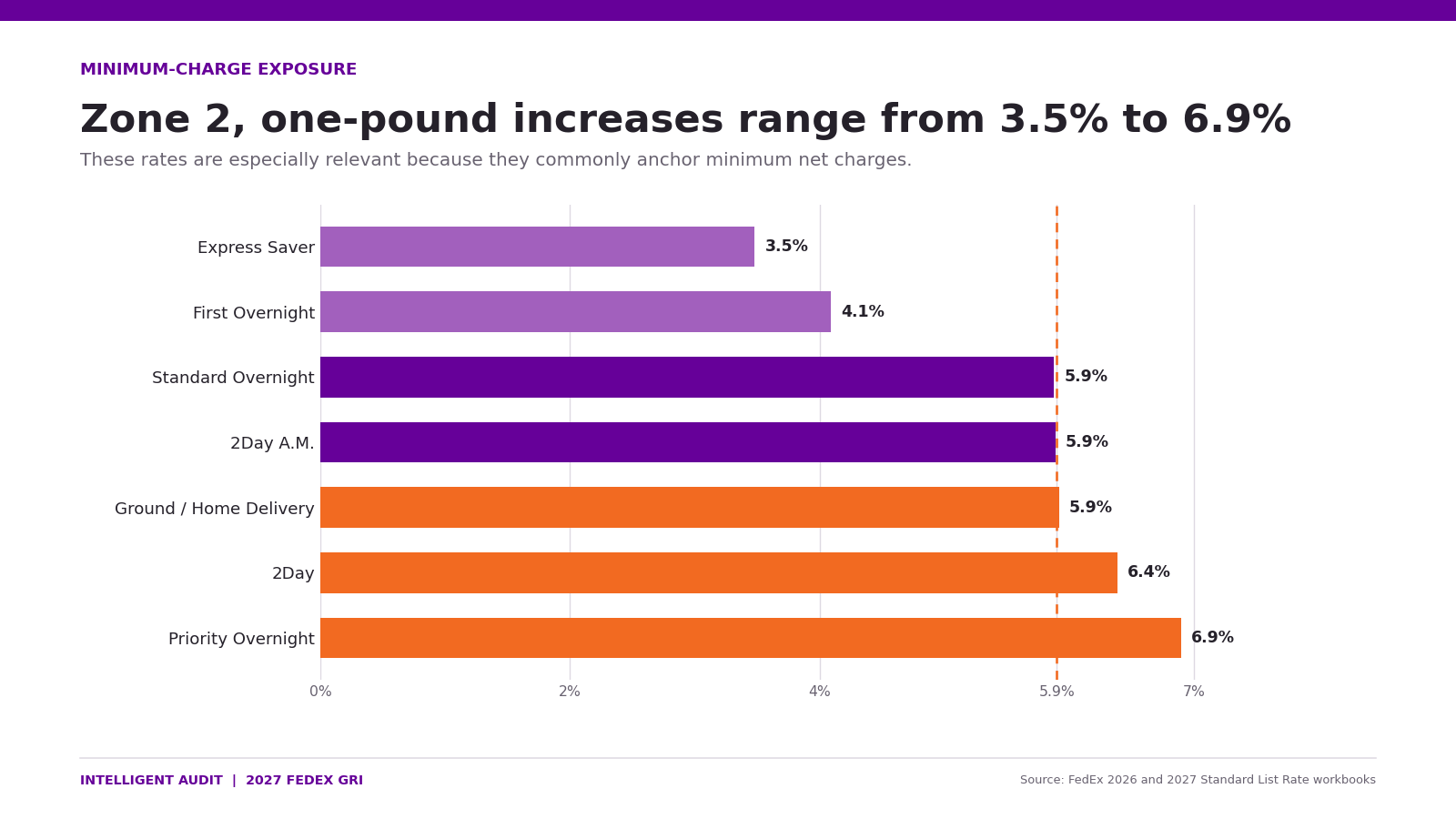
- Zone 2 one-pound rate increases, which are particularly relevant to minimum-charge exposure, range from a 3.5% increase for Express Saver and 4.1% for First Overnight to 6.9% for Priority Overnight.
- Zone 2 one-pound rates for 2 Day, 2 Day A.M., Standard Overnight, and Ground/Home Delivery increase by roughly 5.9% to 6.4%.
- Overall, the zone pattern is not uniform: higher increases are concentrated in selected service-zone combinations rather than applied consistently to a single distance band.
- 2 Day and Ground/Home Delivery trend modestly above it.
Area to Watch: DAS ZIP-code Realignment
However, FedEx’s 2027 GRI stands apart less because of its increases to base freight charges, and more because of a few changes that are not direct rate increases but were announced alongside the GRI.
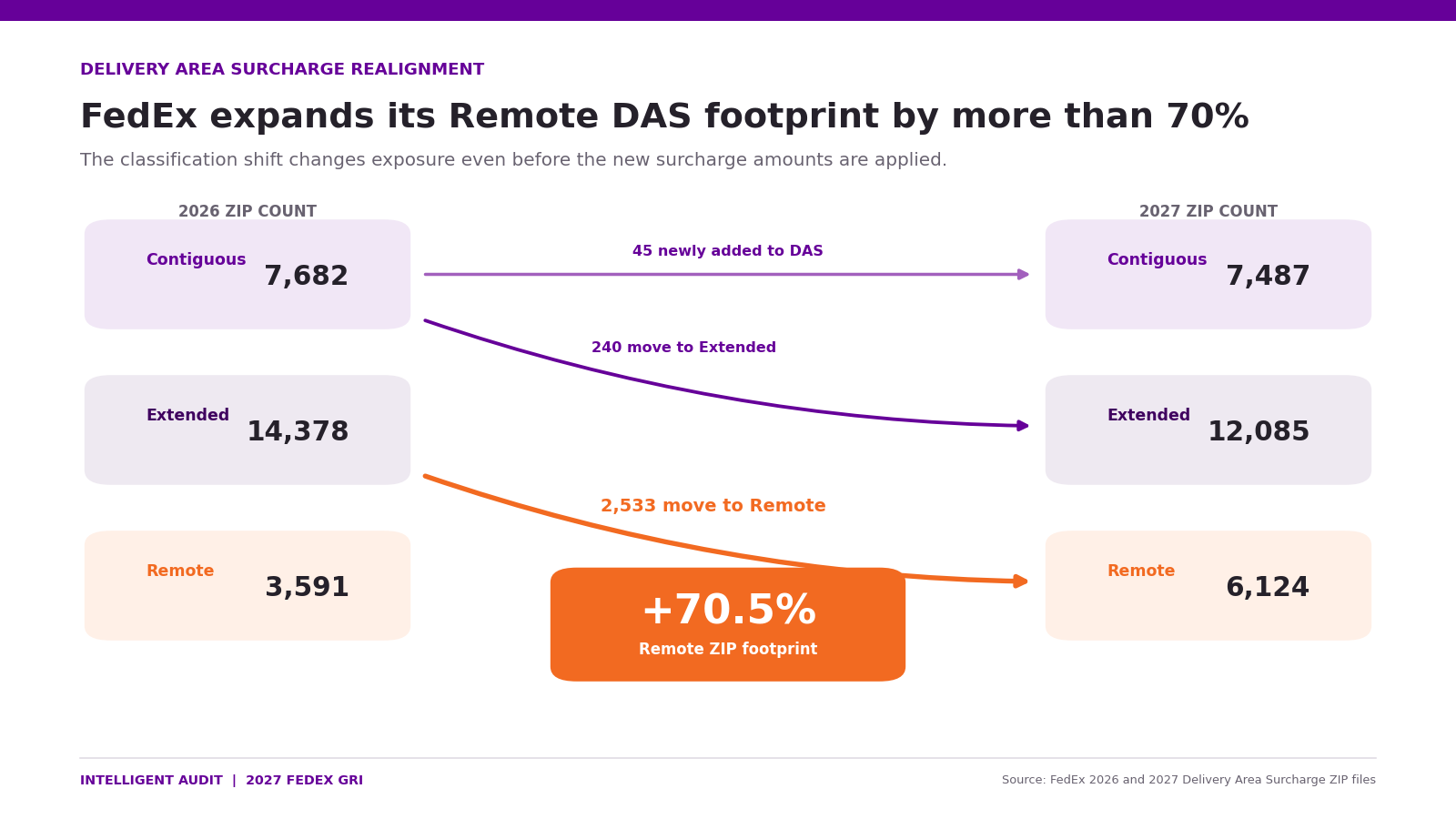
The most significant departure from recent GRIs is the Delivery Area Surcharge ZIP-code realignment:
- 2,533 ZIP codes move from Extended to Remote.
- 240 move from Contiguous U.S. to Extended.
- 45 ZIP codes are newly added to DAS.
As a result, the number of ZIP codes classified as Remote rises from 3,591 to 6,124 – an increase of more than 70% and nearly doubling FedEx’s Remote DAS footprint.
The Announced Zone-Classification Change
A second area to watch is FedEx’s announced zone-classification change for select U.S. domestic origin-destination ZIP-code pairs, effective February 1, 2027.
FedEx has not yet published the affected ZIP pairs or the resulting zone changes, leaving a material unknown outside the published GRI analysis. Because zone changes affect base transportation rates, this could create meaningful upside or downside by zip code pair once details are released.
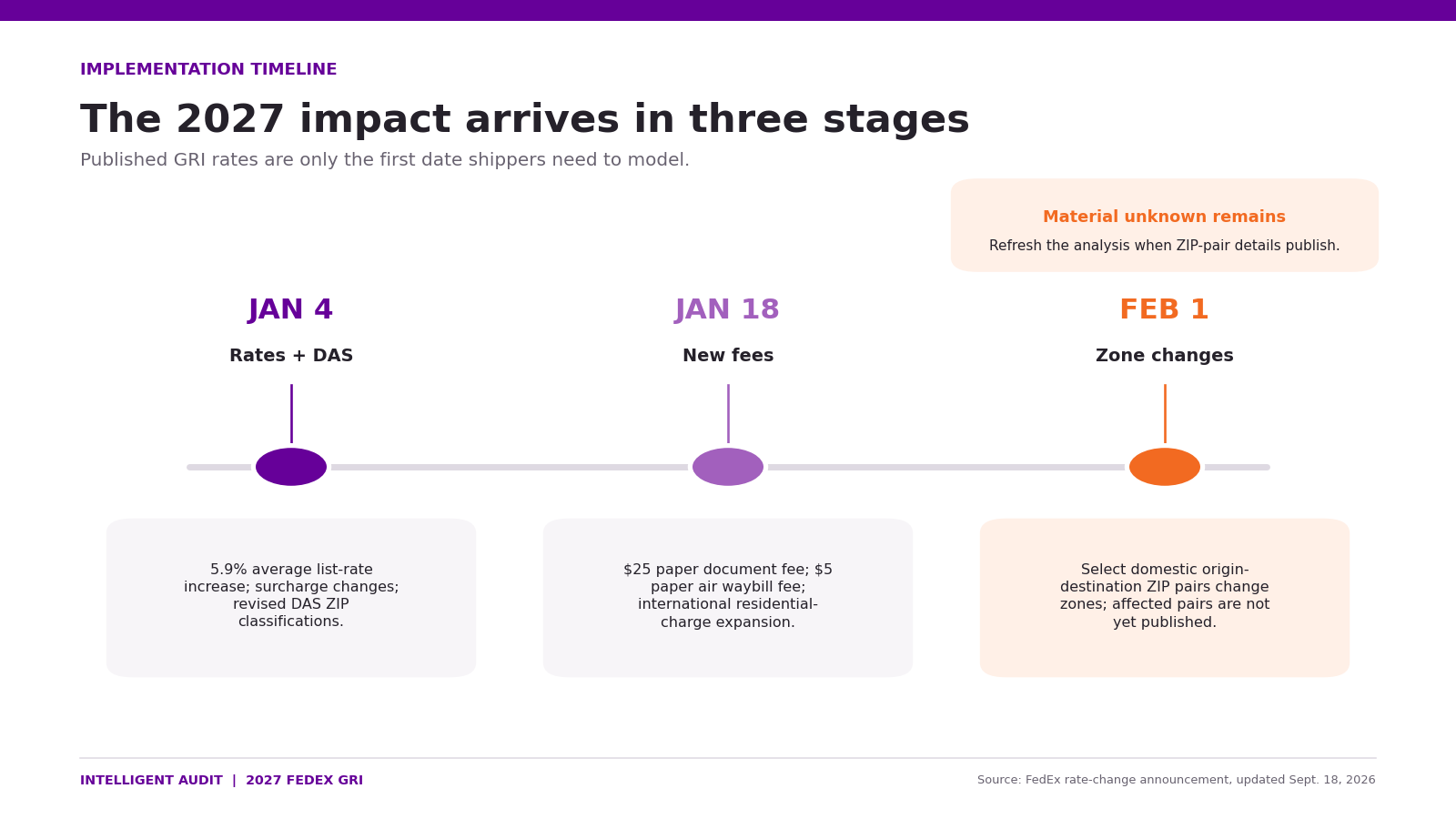
The rate changes otherwise follow the familiar GRI pattern, with most common surcharges increasing in the mid to upper single digits. Taken together, these changes mean that evaluating only FedEx’s published rate increase will not be sufficient to understand the full 2027 impact.
Shippers should pair their service and surcharge rate analysis with a review of the revised DAS ZIP classifications, then refresh the assessment once FedEx releases the affected origin-destination ZIP pairs for its zone changes.
Need help making sense of the total impact on your budget? Reach out to our team here.
Subscribe for more content!
Stay ahead of the curve in supply chain and logistics technology. Get practical insights on AI-driven automation, real-time visibility, and the tools reshaping how goods move—delivered straight to your inbox.


