Key Takeaways from Parcel Forum’s Panel on Building a Customer-Forward eCommerce Parcel Network
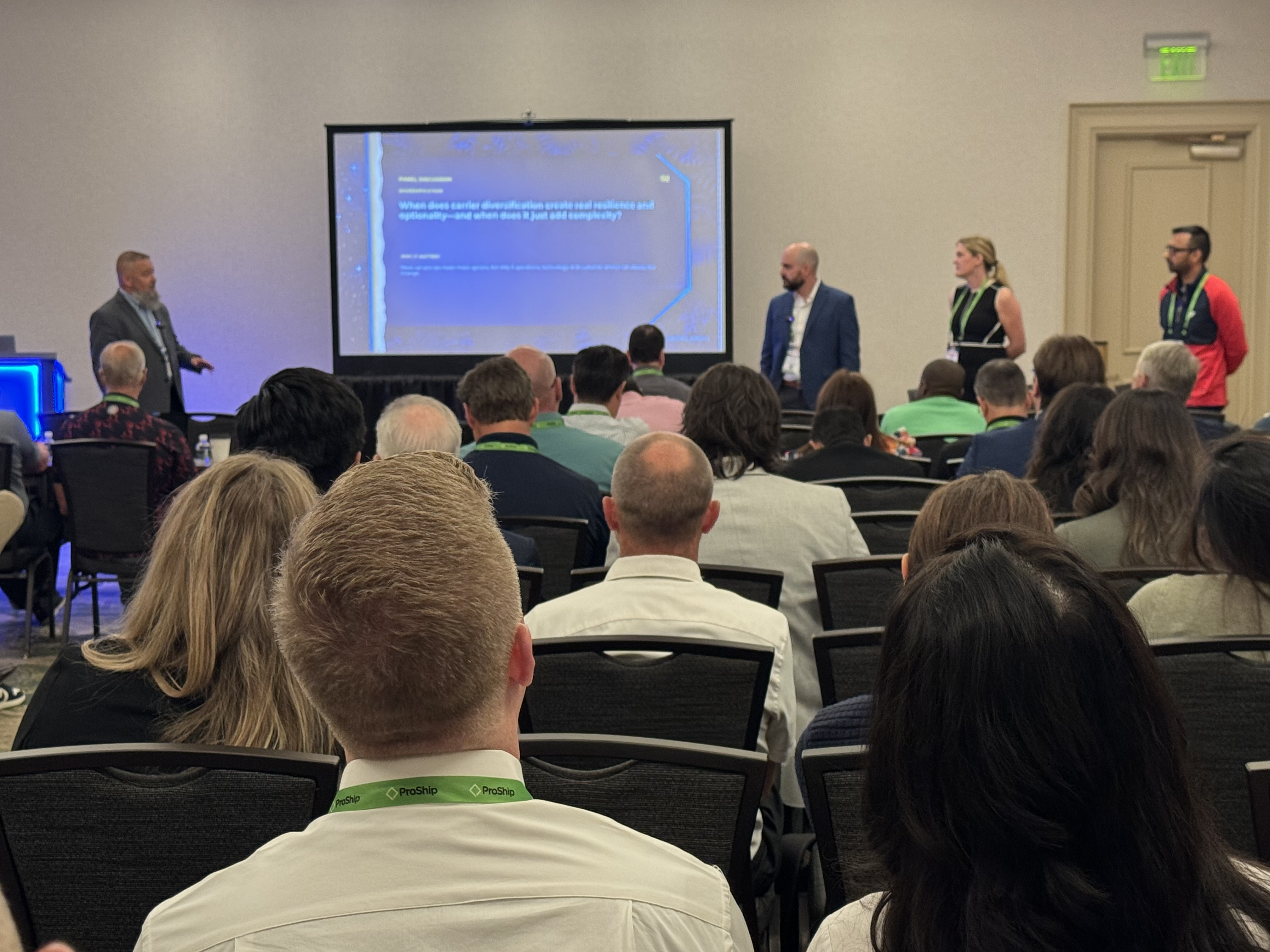

The most useful logistics conversations are the ones that move past familiar talking points. Parcel Forum’s recent panel session on parcel strategy did exactly that, offering a timely reminder: success is not about finding the cheapest carrier. It is about designing a resilient, data-informed network that supports the customer experience and can evolve with the business.
Who was on the panel?
- Joe Wilkinson, VP of Professional Services, Intelligent Audit
- Marlene Clark, Director of Transportation, EssilorLuxottica
- Julien Cavalletto, Director of Transportation, Backcountry
- Nitin Kumar, Director of Supply Chain Analytics, Fanatics
Here are the takeaways that stood out.
The lowest rate can still be the most expensive choice
Carrier cost should never be evaluated in isolation. A lost package costs more than the refund or replacement; it can introduce customer-service workload, delay a customer order, and erode trust in the brand.
That is especially true for proactive replacement shippers. Reliable, consistent scan events are essential because they enable teams to identify an issue, communicate with the customer, and act before a poor delivery experience becomes a loyalty problem.
The question is not simply, “Did the package arrive?” It is whether the service data and delivery experience support the promise made to the customer.
Build carrier relationships around a real win-win
The best carrier negotiations start with a clear understanding of what each party values. What portion of your business does a carrier most want? Which lanes, package characteristics, service levels, or customer segments are especially valuable to them?
With those answers, shippers can segment their volume and negotiate from a more strategic position. Rather than asking one carrier to win every piece of business, identify the portions of the network where each partner is well positioned to deliver value. A carrier may compete aggressively for B2B volume, for example, while an e-commerce strategy may call for a different mix of partners and service options.
This approach creates a healthier relationship than treating every discussion as a zero-sum rate negotiation. It gives the carrier meaningful volume and gives the shipper a network aligned to its operational and customer needs.
Service is part of the brand experience
Cost and on-time performance matter, but they are not the whole picture. Depending on the shipment and the customer, a uniformed driver, dependable handling, visibility throughout the journey, or the ability to offer delivery options may be just as important.
That is why carrier strategy has to begin with the audience.
Know what:
- Customers expect
- What sales or your website should promise
- Where operations needs consistency
The right solution for a high-value B2B delivery may not be the right solution for a residential e-commerce order.
Flexibility has to be engineered
The companies that win are the ones that can change continuously. That requires flexibility across carrier partnerships, technology, operating processes, and internal teams. And not just flexibility internally, but externally too. Just like your logistics operations needs choices, your customer wants them too.
Contingency planning is a key part of that readiness. If a provider faces disruption, where can volume be diverted? If demand changes, can the organization adjust its mix without creating chaos downstream? Shippers are not stuck when they are already engineering for the next chapter.
Of course, providing customers with more options also creates operational complexity. The execution is where the magic happens, and it takes consistent coordination across marketing, sales, operations, and transportation to make those options real.
The goal is not flexibility for its own sake; it is a network that can respond quickly while remaining reliable and manageable.
Data quality is equally as important
In a multi-carrier environment, poor data can quickly undermine a good strategy. Clean, consistent data is essential for evaluating performance, managing new regional partners, resolving exceptions, and making sound network decisions. Garbage in, garbage out still applies.
You don’t want to be in a position where you’re making decisions based on on-time delivery rates that are based on inconsistent scans. Or worse? The scan didn’t come through, so you sent another package to the customer proactively. Now the customer has two of the same order and is left wondering what happened. And, you’ve now lost margin on the sale.
The same principle matters as AI becomes more common in contract analysis and logistics decision-making. AI can accelerate analysis, surface opportunities, and help teams work through complex agreements.
But it cannot determine what is “good” without high-quality source material and business context. Shippers still need reliable data, clear objectives, and knowledgeable people guiding the work.
Ask and (sometimes) you shall receive
One final takeaway: do not be afraid to ask. Not every request will be accepted, but the right concession, service commitment, or contract term can create meaningful value when it is.
That means looking beyond the immediate rate card and considering the full duration of the agreement. What will the business need next year? Where could the volume shift? Which service requirements are non-negotiable? What contingencies should be addressed now rather than during a disruption?
The strongest parcel strategies do not chase the lowest price at all costs. They balance cost, service, visibility, customer experience, data quality, and adaptability, then build carrier partnerships that make that balance sustainable.
Subscribe for more content!
Stay ahead of the curve in supply chain and logistics technology. Get practical insights on AI-driven automation, real-time visibility, and the tools reshaping how goods move—delivered straight to your inbox.