AI is Moving Forward. How Can Transportation Teams Move With It?


A transportation leader should be able to ask why costs increased last month and get an answer that helps them decide what to do next.
That answer might need to account for changes in shipment volume, service selection, package characteristics, accessorial charges, and carrier rates. It might also need to distinguish an operational problem from a deliberate business decision.
Finding it can take several reports, multiple systems, and hours of investigation. AI creates an opportunity to change that experience. But making it useful requires reliable information, secure connections, and an understanding of how transportation operations work. That is what we are hearing across organizations. Teams see the possibilities.
They want help understanding how to bring them into their own operations. It is why we added a new webinar to the calendar: a candid conversation about what connected AI makes possible, what it requires, and how transportation teams can move forward.
Adoption is advancing. Business impact is still catching up.
McKinsey’s August 2026 State of AI survey offers a useful picture of where enterprises stand.
80% of respondents said AI had improved their individual productivity. Yet only 37% attributed any enterprise-level earnings impact to AI. Among respondents from organizations with at least $1 billion in annual revenue, only 54% reported scaling AI across their enterprise.
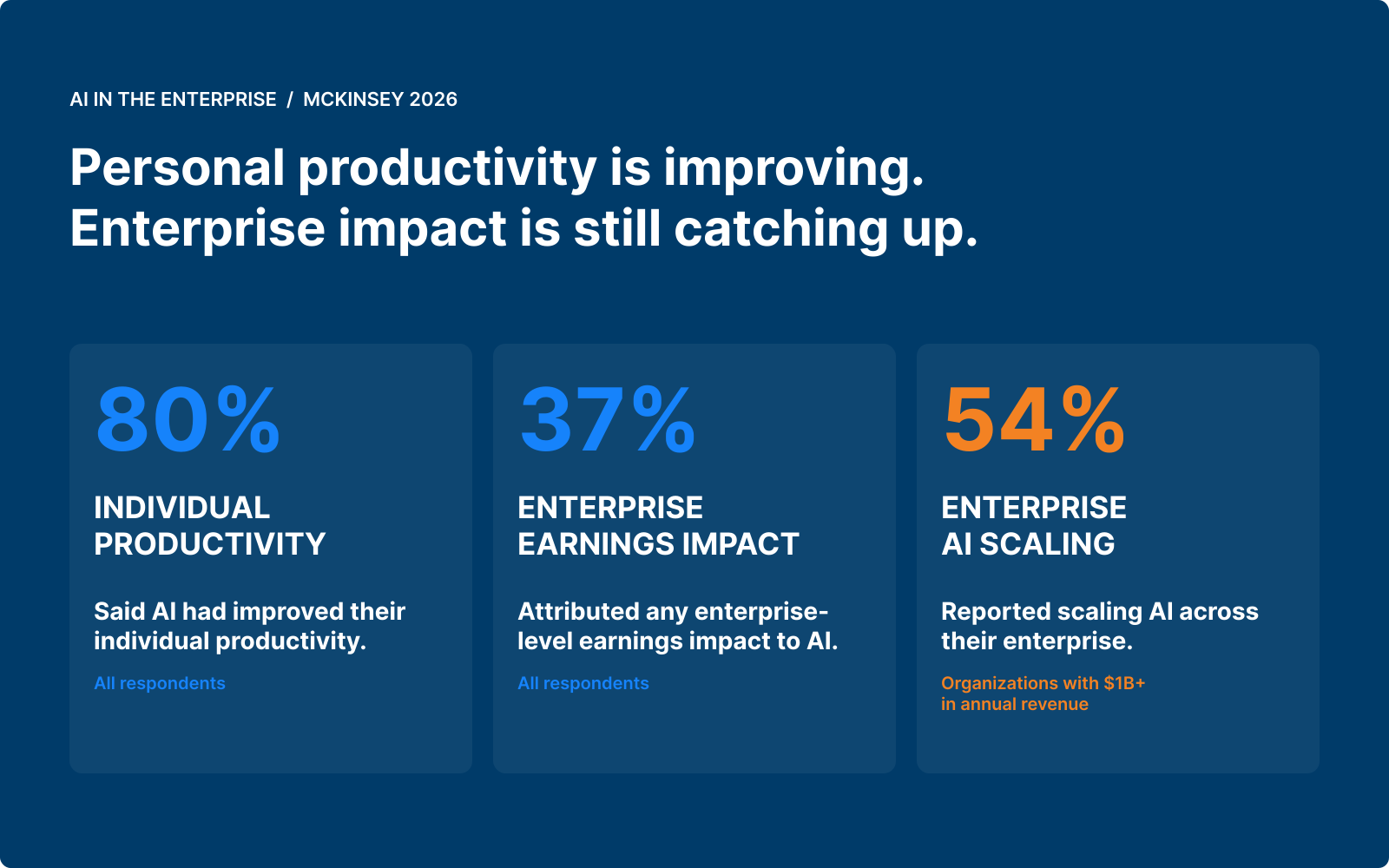
The 54% figure reflects respondents at organizations with at least $1 billion in annual revenue.
Those findings describe meaningful progress, along with a challenge: turning individual gains into consistent business performance.
There is encouraging evidence for the teams we’re talking to. Supply chain management was among the functions where respondents most frequently reported cost reductions from AI. McKinsey also found that high-performing organizations distinguished themselves through workflow redesign, leadership commitment, and operational discipline. For transportation teams, our interpretation is that the opportunity extends beyond completing an existing task faster.
It includes rethinking how information reaches people, how problems are investigated, and how decisions get made. But access and integration continue to be roadblocks.
The operational questions deserve more attention
Consider the question, “Why did our cost per shipment increase?”
An AI tool might help investigate. To produce a useful answer, however, it needs more than a total spending figure. It needs comparable records, consistent definitions, and enough context to distinguish the factors behind the change. If one system records a charge differently from another, or invoice data is incomplete, the explanation could be misleading. If the team cannot see the supporting records, checking the answer becomes another task.
Gartner’s May 2026 analysis of supply chain AI deployment identifies precisely these kinds of foundational challenges. It points to gaps in data readiness, employee skills, fragmented vendor systems, and inconsistent information from trading partners. It also emphasizes clear processes, aligned roles, and standardized data models.
For a transportation team, that means asking practical questions early:
- Which information does the AI need, and can we trust it?
- Can people trace an answer back to its source?
- What happens when information is missing or conflicting?
- Who reviews recommendations, approves actions, and owns the outcome?
- How do we govern what AI has access to within our organization?
These questions help turn an, “is this possible?” into something a team can use repeatedly.
People remain central to the work
The conversation about AI often moves quickly toward predictions about replacing entire teams. The current evidence deserves a more measured reading.
In McKinsey’s 2026 survey, 14% of respondents from organizations using AI reported that it contributed to an overall workforce decline during the previous year. Looking ahead, 39% expected declines in the coming year. That does not mean every role will remain the same. Tasks will change, some work will be automated, and organizations will make different decisions about staffing. In transportation, the important question is how people and technology can work together effectively.
A system may identify a shift toward a more expensive service. Someone still needs to understand whether it reflects customer commitments, inventory placement, product requirements, or avoidable misuse. AI can help bring a problem into view. Operational experience helps determine what the business should do about it. Gartner’s supply chain analysis explicitly identifies human expertise, sustained upskilling, and gradual adoption as requirements for greater decision autonomy.
Trusted data requires shared responsibility
The technical work matters. So does how people adopt and sustain it.
In research published September 21, 2026, Gartner reported that cultural resistance outweighed funding constraints as a reason data governance initiatives fail. Gartner recommends shared accountability across business and technology teams, with governance, data literacy, and change management embedded in everyday work.
Our takeaway is that an AI initiative needs people who understand both the information and the decisions it supports. A transportation team, an IT team, and a business leader may approach the same project with different priorities. Bringing those perspectives together helps establish what success looks like, which controls are necessary, and who will support the capability over time.
That is also where build-versus-buy decisions become more useful. Teams need to consider integration, security, maintenance, and ownership alongside what they can create in a prototype.
A starting point can be focused and ambitious
Teams do not need to solve every problem at once to move forward.
Start with a recurring question that takes too long to answer. A report that consumes hours of preparation. An exception that deserves earlier attention. A decision that would benefit from better access to information. Define the desired outcome, identify the required data, and establish how the result will be checked. Then measure whether the team can act sooner, investigate more effectively, or reduce unnecessary work.
A focused application can deliver value while helping the organization learn what broader deployment will require.
Join us for a look behind the curtain
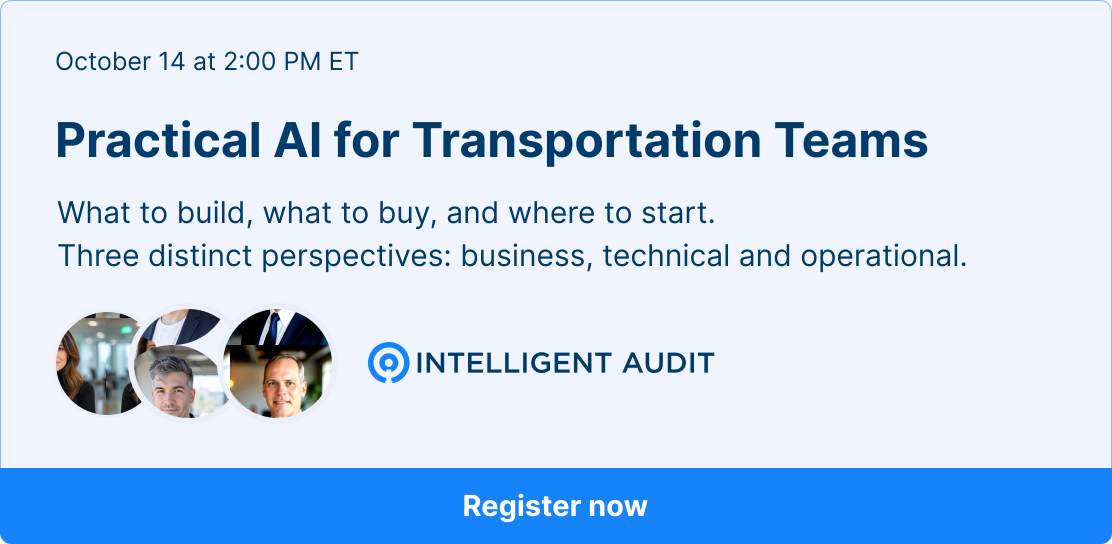
On October 14, three Intelligent Audit leaders will bring their perspectives to Practical AI for Transportation Teams: What to Build, What to Buy, and Where to Start.

Hannah Testani, CEO, will bring the business perspective, grounded in the question, “What can we do better, faster, or more effectively?” Hannah is an EY Entrepreneur of the Year, a McKinsey Logistics Disruptor, and Logistics Business Outlook’s 2026 Woman CEO of the Year.

Dr. Brian Pollack, Chief Product Officer, will bring the technical perspective, answering the question, “How do we make this possible?” A 2025 Breakthrough Prize laureate through CERN’s CMS collaboration, Brian’s research and development journey has included work with OpenAI.

Paul Finley, Chief Operating Officer, will bring the operational perspective, answering, “Okay, how do we make this actually work?” He draws on a decade on the shipper side before joining IA and more than 20 years of hands-on experience. Paul was named a “Pro to Know” earlier this year for his excellence in operational leadership.
Together, they will explore what connected AI makes possible, what data and safeguards need to be in place, how to approach build-versus-buy decisions, and where teams at different stages can realistically begin.
We want to share what we have learned, make room for difficult questions, and help transportation, logistics, and supply chain teams see how much further they could go.
Join us for this candid conversation and a look behind the curtain.
Bring your questions. We will answer them throughout the discussion. Cannot attend live? Register to receive on-demand access after the session.
Subscribe for more content!
Stay ahead of the curve in supply chain and logistics technology. Get practical insights on AI-driven automation, real-time visibility, and the tools reshaping how goods move—delivered straight to your inbox.